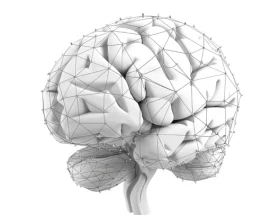
Holleran et al. (2020) investigated the relationship between white matter microstructure and cognitive ability in patients with schizophrenia and healthy individuals. Drawing on data from the ENIGMA Consortium, the study analyzed how global and regional white matter connectivity relates to cognitive performance, offering a comprehensive perspective on the structural underpinnings of cognition.
Background
White matter microstructure plays a crucial role in neural connectivity and cognitive functioning. Schizophrenia has long been associated with disruptions in white matter integrity, but the broader implications of these abnormalities for cognitive performance remain uncertain. By analyzing data from over 1,700 participants across 11 sites, this study aimed to clarify these relationships in both clinical and non-clinical populations.
Key Insights
- Global Fractional Anisotropy and Cognition: Higher global fractional anisotropy, a marker of white matter integrity, was linked to better cognitive performance, regardless of diagnosis.
- Regional Connectivity Patterns: Cognitive ability correlated with fractional anisotropy in six long association tracts, suggesting widespread structural connections are key to higher cognitive functioning.
- Consistency Across Groups: The findings indicate a general pattern of association between white matter integrity and cognition, unaffected by schizophrenia diagnosis.
Significance
The results provide robust evidence of a link between structural brain connectivity and cognitive ability. The large sample size and consistent analysis methods enhance the reliability of the findings, which support the idea that white matter integrity contributes to cognitive performance beyond the effects of specific diagnoses. These insights may help guide future research on interventions targeting white matter abnormalities to improve functional outcomes in schizophrenia.
Future Directions
While the study demonstrates a clear relationship between white matter integrity and cognition, the functional effects of these abnormalities in schizophrenia remain unclear. Future research could explore the mechanisms underlying these connections and identify ways to leverage these findings for therapeutic advancements. Investigating other neurological and psychiatric conditions could also shed light on shared and unique patterns in brain structure and cognition.
Conclusion
Holleran et al. (2020) provide valuable insights into how white matter microstructure relates to cognitive performance across clinical and non-clinical groups. By emphasizing the general nature of this relationship, the study underscores the importance of global structural connectivity in understanding cognition and paves the way for further exploration of its functional implications.
Reference:
Holleran, L., Kelly, S., Alloza, C., Agartz, I., Andreassen, O. A., Arango, C., … & Donohoe, G. (2020). The Relationship Between White Matter Microstructure and General Cognitive Ability in Patients With Schizophrenia and Healthy Participants in the ENIGMA Consortium. American Journal of Psychiatry, 177(6), 537-547. https://doi.org/10.1176/appi.ajp.2019.19030225
Related Research
Gifted Children: Identification and Testing
Your child taught themselves to read at four. They ask questions about black holes at dinner. Their teacher says they are "ahead" but seems unsure…
Apr 21, 2026Does Music Training Increase IQ?
Few claims in popular science have been as durable as the idea that music makes you smarter. The 1990s "Mozart Effect" sent pregnant women rushing…
Apr 15, 2026Working Memory: Why It Matters
Working memory is the cognitive system that holds a small amount of information in mind, briefly, in a way that allows you to use it.…
Apr 13, 2026The G Factor: What General Intelligence Means
The g factor — Charles Spearman's name for the common variance that runs through all cognitive tests — is the most replicated and the most…
Apr 10, 2026Sleep Deprivation and Cognitive Performance
Williamson and Feyer (2000), in Occupational and Environmental Medicine, ran a deceptively simple experiment: they kept healthy adults awake for 28 hours and tested their…
Apr 8, 2026People Also Ask
What are the link between physical activity and cognitive health?
Recent research highlights how everyday physical activity can benefit cognitive health. A study by Hakun et al. (2024) examined the short-term effects of regular physical activity on mental processing speed and working memory. Using real-time assessments, the study provides new insights into how light and moderate physical activities can promote brain health in middle-aged adults.
Read more →What are sensorimotor variability and early cognition?
A recent study by Denisova and Wolpert (2024) investigates how early sensorimotor features relate to cognitive differences in toddlers diagnosed with autism spectrum disorder (ASD). By examining over 1,000 children with varying IQ levels, the researchers reveal how sensorimotor variability impacts behaviors linked to autism, providing valuable insights for individualized interventions.
Read more →What are distinct genetic and environmental origins of hierarchical cognitive abilities in adult humans?
Understanding how genetic and environmental influences shape cognitive abilities remains a cornerstone of psychological research. Jiang et al. (2024) present an important study that examines these influences through a structured twin-based model. This research provides insight into how basic and higher-order cognitive functions are differentially affected by genetic inheritance and shared experiences.
Read more →What are shaping hierarchical cognitive abilities?
Recent research by Jiang et al. (2024) sheds light on the distinct genetic and environmental influences shaping hierarchical cognitive abilities in adults. By categorizing cognitive functions into two levels—basic processes and higher-order functions—this study provides valuable insights into how these abilities develop and differ in their origins.
Read more →Why is background important?
White matter microstructure plays a crucial role in neural connectivity and cognitive functioning. Schizophrenia has long been associated with disruptions in white matter integrity, but the broader implications of these abnormalities for cognitive performance remain uncertain. By analyzing data from over 1,700 participants across 11 sites, this study aimed to clarify these relationships in both clinical and non-clinical populations.
How does key insights work in practice?
Global Fractional Anisotropy and Cognition: Higher global fractional anisotropy, a marker of white matter integrity, was linked to better cognitive performance, regardless of diagnosis. Regional Connectivity Patterns: Cognitive ability correlated with fractional anisotropy in six long association tracts, suggesting widespread structural connections are key to higher cognitive functioning. Consistency Across Groups: The
Freitas, N. (2020, March 26). White Matter Microstructure and Cognitive Performance. PsychoLogic. https://www.psychologic.online/white-matter-microstructure-and-cognitive-performance/