Moutoussis et al. (2021) introduce “decision acuity” as a measurable cognitive construct distinct from intelligence quotient (IQ). Their research investigates how decision acuity relates to mental health, social functioning, and brain connectivity, offering new insights into the interplay between cognition and psychopathology.
Background
Decision-making has long been recognized as a core cognitive ability, but its relationship with mental health and brain function remains underexplored. Moutoussis and colleagues conducted a large-scale study involving over 800 participants, aiming to quantify decision-making as a distinct cognitive factor. By analyzing patterns across a diverse set of decision tasks, the authors identified decision acuity as a separate construct, differentiating it from IQ and linking it to social and mental health outcomes.
Key Insights
Connection to Mental Health: Lower decision acuity was associated with increased psychopathology, including impaired social functioning and aberrant thought patterns.
- A Distinct Cognitive Construct: Decision acuity emerged as a unique factor from 32 decision-making tasks, independent of IQ. It represents a general ability to make decisions across various contexts.
- Connection to Mental Health: Lower decision acuity was associated with increased psychopathology, including impaired social functioning and aberrant thought patterns.
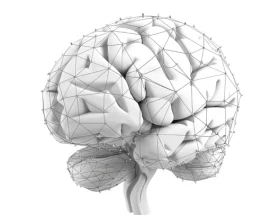
- Neural Signatures: Resting-state functional connectivity analyses revealed distinct brain network patterns for decision acuity and IQ, suggesting these abilities rely on separate neural mechanisms. These patterns remained consistent over an 18-month period.
Significance
This study advances computational psychiatry by defining decision acuity as a measurable and consistent cognitive construct. Its association with psychopathology highlights its potential as a diagnostic tool for identifying individuals at risk of mental health challenges. Additionally, distinguishing decision acuity from IQ underscores the complexity of human cognition and provides a broader understanding of how cognitive abilities are organized in the brain.
Future Directions
Further research could explore clinical applications of decision acuity, such as interventions aimed at improving decision-making skills to mitigate associated psychopathologies. Additionally, examining specific brain networks involved in decision acuity may offer deeper insights into its neural basis and inform strategies for enhancing cognitive resilience.
Conclusion
By defining decision acuity and linking it to mental health and brain connectivity, Moutoussis et al. (2021) contribute to a more nuanced understanding of cognitive processes. Their findings open new avenues for research and practical applications in psychiatry, emphasizing the value of separating distinct cognitive abilities to address mental health challenges effectively.
Reference:
Moutoussis, M., Garzón, B., Neufeld, S., NSPN Consortium, Guitart-Masip, M., Dolan, R. J. (2021). Decision-making ability, psychopathology, and brain connectivity. Neuron, 109(10), 1595-1610. https://doi.org/10.1016/j.neuron.2021.04.019
Related Research
Does Music Training Increase IQ? What the Research Actually Shows
Few claims in popular science are as persistent as the idea that music makes you smarter. From the "Mozart Effect" craze of the 1990s —…
Apr 15, 2026Working Memory: Why It Matters More Than You Think
Every time you hold a phone number in mind while searching for a pen, follow a multi-step recipe, or mentally compare two arguments in a…
Apr 13, 2026The G Factor: What General Intelligence Really Means
In 1904, Charles Spearman noticed something that would reshape the study of intelligence for the next century: children who scored well on one type of…
Apr 10, 2026Sleep Deprivation and Cognitive Performance: What One Bad Night Does to Your Brain
In 1999, researchers at the University of New South Wales made a startling discovery: people who had been awake for 17–19 hours performed on cognitive…
Apr 8, 2026Mindfulness and Cognitive Performance: Does Meditation Actually Make You Smarter?
Meditation has entered the mainstream. From corporate boardrooms to elementary schools, from military training to clinical therapy, mindfulness practices are promoted as cognitive enhancers that…
Apr 6, 2026People Also Ask
What are the link between physical activity and cognitive health?
Recent research highlights how everyday physical activity can benefit cognitive health. A study by Hakun et al. (2024) examined the short-term effects of regular physical activity on mental processing speed and working memory. Using real-time assessments, the study provides new insights into how light and moderate physical activities can promote brain health in middle-aged adults.
Read more →What are sensorimotor variability and early cognition?
A recent study by Denisova and Wolpert (2024) investigates how early sensorimotor features relate to cognitive differences in toddlers diagnosed with autism spectrum disorder (ASD). By examining over 1,000 children with varying IQ levels, the researchers reveal how sensorimotor variability impacts behaviors linked to autism, providing valuable insights for individualized interventions.
Read more →What are distinct genetic and environmental origins of hierarchical cognitive abilities in adult humans?
Understanding how genetic and environmental influences shape cognitive abilities remains a cornerstone of psychological research. Jiang et al. (2024) present an important study that examines these influences through a structured twin-based model. This research provides insight into how basic and higher-order cognitive functions are differentially affected by genetic inheritance and shared experiences.
Read more →What are shaping hierarchical cognitive abilities?
Recent research by Jiang et al. (2024) sheds light on the distinct genetic and environmental influences shaping hierarchical cognitive abilities in adults. By categorizing cognitive functions into two levels—basic processes and higher-order functions—this study provides valuable insights into how these abilities develop and differ in their origins.
Read more →Why is background important?
Decision-making has long been recognized as a core cognitive ability, but its relationship with mental health and brain function remains underexplored. Moutoussis and colleagues conducted a large-scale study involving over 800 participants, aiming to quantify decision-making as a distinct cognitive factor. By analyzing patterns across a diverse set of decision tasks, the authors identified decision acuity as a separate construct, differentiating it from IQ and linking it to social and mental health outcomes.
How does key insights work in practice?
A Distinct Cognitive Construct: Decision acuity emerged as a unique factor from 32 decision-making tasks, independent of IQ. It represents a general ability to make decisions across various contexts. Connection to Mental Health: Lower decision acuity was associated with increased psychopathology, including impaired social functioning and aberrant thought patterns. Neural Signatures: Resting-state
Freitas, N. (2021, May 20). Decision Acuity and Its Impact on Mental Health. PsychoLogic. https://www.psychologic.online/2021/05/20/decision-acuity-mental-health/