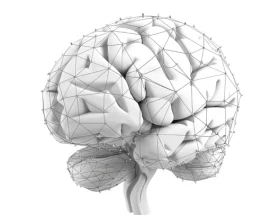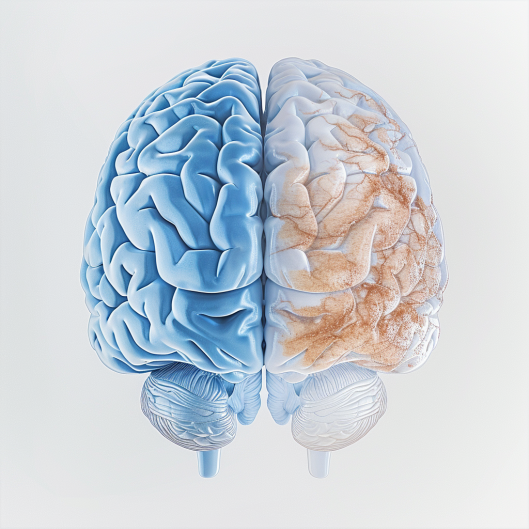
This study by Mancini et al. (2021) examines how early treatment with selective serotonin reuptake inhibitors (SSRIs) affects cognition and brain development in individuals with 22q11.2 deletion syndrome (22q11DS). This syndrome is associated with a high risk for schizophrenia, making it an important focus for research into psychosis and its developmental impacts. The authors conducted a retrospective cohort study to assess long-term outcomes related to cognitive function and brain structure.
Background
22q11DS is a genetic disorder that predisposes individuals to a range of psychiatric and cognitive challenges, including a heightened risk for schizophrenia. The potential for early interventions to mitigate these effects has been of significant interest in recent years. Mancini et al. sought to evaluate the role of SSRIs, a class of medications commonly used for mood and anxiety disorders, in influencing cognitive outcomes and brain development within this population.
Key Insights
Changes in Brain Structure: Increased cortical thickness in the frontal regions and greater hippocampal volume were observed among those receiving SSRIs.
- Improved Cognitive Trajectories: Participants treated with SSRIs showed improved IQ scores and developmental trajectories, even in the presence of psychotic symptoms.
- Changes in Brain Structure: Increased cortical thickness in the frontal regions and greater hippocampal volume were observed among those receiving SSRIs.
- Timing Matters: The benefits of treatment were more pronounced in participants who began SSRIs at younger ages, suggesting earlier intervention may be more effective.
Significance
The findings suggest that early, sustained SSRI treatment may help reduce cognitive decline and mitigate some developmental brain abnormalities associated with psychosis in 22q11DS. This has implications for developing strategies to improve long-term outcomes in individuals with this genetic condition. However, as this study is preliminary, further research is necessary to confirm these results and to better understand the risks and benefits of SSRI use in this context.
Future Directions
Further studies should investigate the mechanisms underlying the observed cognitive and brain development changes, explore the generalizability of these findings to other populations at risk for psychosis, and assess the long-term safety and efficacy of early SSRI interventions. Expanding these studies to include larger and more diverse cohorts will enhance the reliability and applicability of the results.
Conclusion
This study provides encouraging evidence for the potential role of SSRIs in supporting cognitive and brain development in individuals with 22q11DS. While the findings are promising, careful and comprehensive research is required to refine early intervention strategies and ensure their safety and effectiveness for at-risk populations.
Reference:
Mancini, V., Maeder, J., Bortolin, K., Schneider, M., Schaer, M., & Eliez, S. (2021). Long-term effects of early treatment with SSRIs on cognition and brain development in individuals with 22q11.2 deletion syndrome. Translational Psychiatry, 11, 336. https://doi.org/10.1038/s41398-021-01480-3
Related Research
Does Music Training Increase IQ? What the Research Actually Shows
Few claims in popular science are as persistent as the idea that music makes you smarter. From the "Mozart Effect" craze of the 1990s —…
Apr 15, 2026Working Memory: Why It Matters More Than You Think
Every time you hold a phone number in mind while searching for a pen, follow a multi-step recipe, or mentally compare two arguments in a…
Apr 13, 2026The G Factor: What General Intelligence Really Means
In 1904, Charles Spearman noticed something that would reshape the study of intelligence for the next century: children who scored well on one type of…
Apr 10, 2026Sleep Deprivation and Cognitive Performance: What One Bad Night Does to Your Brain
In 1999, researchers at the University of New South Wales made a startling discovery: people who had been awake for 17–19 hours performed on cognitive…
Apr 8, 2026Mindfulness and Cognitive Performance: Does Meditation Actually Make You Smarter?
Meditation has entered the mainstream. From corporate boardrooms to elementary schools, from military training to clinical therapy, mindfulness practices are promoted as cognitive enhancers that…
Apr 6, 2026People Also Ask
What are the link between physical activity and cognitive health?
Recent research highlights how everyday physical activity can benefit cognitive health. A study by Hakun et al. (2024) examined the short-term effects of regular physical activity on mental processing speed and working memory. Using real-time assessments, the study provides new insights into how light and moderate physical activities can promote brain health in middle-aged adults.
Read more →What are gender differences in early education impacts on cognitive outcomes?
This study, published by Burchinal et al. (2024), examines the long-term effects of early childhood education (ECE) interventions on cognitive outcomes, with a focus on how impacts vary by gender. Using data from the Carolina Abecedarian Project, the researchers explore treatment effects from infancy through middle adulthood, highlighting key differences in outcomes between males and females.
Read more →What are sensorimotor variability and early cognition?
A recent study by Denisova and Wolpert (2024) investigates how early sensorimotor features relate to cognitive differences in toddlers diagnosed with autism spectrum disorder (ASD). By examining over 1,000 children with varying IQ levels, the researchers reveal how sensorimotor variability impacts behaviors linked to autism, providing valuable insights for individualized interventions.
Read more →What are distinct genetic and environmental origins of hierarchical cognitive abilities in adult humans?
Understanding how genetic and environmental influences shape cognitive abilities remains a cornerstone of psychological research. Jiang et al. (2024) present an important study that examines these influences through a structured twin-based model. This research provides insight into how basic and higher-order cognitive functions are differentially affected by genetic inheritance and shared experiences.
Read more →Why is background important?
22q11DS is a genetic disorder that predisposes individuals to a range of psychiatric and cognitive challenges, including a heightened risk for schizophrenia. The potential for early interventions to mitigate these effects has been of significant interest in recent years. Mancini et al. sought to evaluate the role of SSRIs, a class of medications commonly used for mood and anxiety disorders, in influencing cognitive outcomes and brain development within this population.
How does key insights work in practice?
Improved Cognitive Trajectories: Participants treated with SSRIs showed improved IQ scores and developmental trajectories, even in the presence of psychotic symptoms. Changes in Brain Structure: Increased cortical thickness in the frontal regions and greater hippocampal volume were observed among those receiving SSRIs. Timing Matters: The benefits of treatment were more pronounced in
Sharma, P. (2021, June 1). Impact of Early SSRI Treatment on Cognitive and Brain Development in 22q11.2 Deletion Syndrome. PsychoLogic. https://www.psychologic.online/2021/06/01/ssri-22q11-deletion-syndrome-cognition/