In 1904, Charles Spearman noticed something that would reshape the study of intelligence for the next century: children who scored well on one type of cognitive test tended to score well on all of them. Mathematics, vocabulary, spatial reasoning, memory — performance across these seemingly different abilities was positively correlated. Spearman proposed that a single underlying factor, which he called g (for “general intelligence”), explained this pattern. Over 120 years later, the g factor remains the most replicated and debated construct in all of psychology.
How did Spearman discover the g factor?
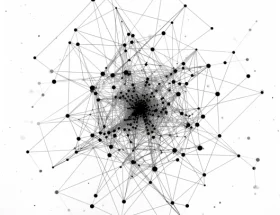
Spearman’s insight came from applying a statistical technique he helped develop — factor analysis — to matrices of correlations between cognitive tests. When people take multiple cognitive assessments, their scores are always positively correlated: someone who excels at vocabulary tends to also perform well on spatial reasoning, arithmetic, and memory tasks. This universal positive correlation is called the positive manifold.
Factor analysis extracts the common variance from this correlation matrix, and Spearman found that a single general factor accounted for a substantial proportion of individual differences across all tests. He proposed a two-factor theory: every cognitive task involves g (the general factor, shared across all tasks) plus s (a specific factor unique to that particular task).
This was revolutionary. Rather than intelligence being a collection of independent abilities, Spearman showed that cognitive abilities are linked by a common thread — a finding that has been replicated thousands of times across diverse populations, age groups, and test batteries.
What exactly is g — a brain property or a statistical artifact?
This question has fueled decades of debate. The leading perspectives:
G as a biological reality: The neural efficiency hypothesis (Haier et al., 1988) proposes that g reflects the overall efficiency of information processing in the brain — the speed and reliability of neural transmission across cortical networks. Neuroimaging studies consistently show that higher g is associated with greater white matter integrity (faster inter-regional communication), more efficient prefrontal cortex activation, and larger total brain volume (r ≈ 0.25–0.40). The parieto-frontal integration theory (P-FIT) identifies a distributed network of brain regions whose connectivity predicts g.
G as an emergent property: Van der Maas et al. (2006) proposed the mutualism model, which argues that g doesn’t reflect a single underlying biological entity but rather emerges from the reciprocal facilitation between cognitive processes during development. As one ability improves, it supports improvement in others — creating the appearance of a general factor without any single cause. Under this model, the positive manifold is real, but “g” is a description of the correlation pattern, not an explanation.
G as a cultural-educational artifact: Some theorists argue that the positive manifold reflects shared educational and cultural experiences rather than a biological substrate. This position has lost ground as research has shown that g is highly heritable, present in pre-literate societies, and observable even in infants — before formal education could create shared cognitive training.
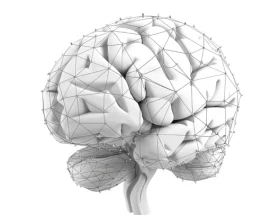
The current consensus leans toward g having a genuine neurobiological basis, though it may be better understood as a network property (the connectivity and efficiency of the whole brain) rather than a localized brain feature.
How does g relate to specific cognitive abilities?
Modern intelligence research, organized around the Cattell-Horn-Carroll (CHC) theory, recognizes a hierarchical structure with g at the apex:
| Level | Description | Examples |
|---|---|---|
| Stratum III: g | General intelligence — common variance across all cognitive tasks | Extracted statistically from test batteries |
| Stratum II: Broad abilities | Intermediate factors — domains of cognitive function | Fluid reasoning (Gf), Crystallized intelligence (Gc), Processing speed (Gs), Working memory (Gwm), Visual processing (Gv) |
| Stratum I: Narrow abilities | Specific skills within broad domains | Induction, Lexical knowledge, Perceptual speed, Spatial relations |
The relationship between g and fluid versus crystallized intelligence is particularly important. Fluid intelligence (Gf) — the ability to reason with novel information — correlates most strongly with g (r ≈ 0.85–0.95 in some analyses), to the point where some researchers consider Gf and g nearly synonymous. Crystallized intelligence (Gc) — accumulated knowledge and skills — also loads on g but is more influenced by educational opportunity and cultural exposure.
Research on the genetic and environmental origins of hierarchical cognitive abilities has shown that g is primarily driven by genetic factors in adulthood, while specific abilities are more influenced by shared and non-shared environmental factors.
What does g predict in the real world?
The predictive power of g extends far beyond academic achievement:
Education: Correlations between g and academic performance range from r ≈ 0.50–0.70, making it the single strongest predictor of educational outcomes. This holds across countries, educational systems, and subject areas — though the correlation is strongest for novel, complex material and weaker for rote memorization.
Occupational performance: Schmidt and Hunter’s (1998) landmark meta-analysis found that general cognitive ability predicted job performance with a validity coefficient of r ≈ 0.51 — higher than any other single predictor, including work experience (r ≈ 0.18), conscientiousness (r ≈ 0.31), or job interviews (r ≈ 0.38). The prediction was stronger for complex jobs and weaker for simpler ones.
Income: The correlation between g and income (r ≈ 0.30–0.40) is moderate but meaningful, accumulating to large lifetime differences. However, the relationship plateaus at higher IQ levels — above approximately IQ 120, further increases in g contribute less to earnings, while personality, social skills, and opportunity play larger roles.
Health and longevity: Perhaps the most surprising finding: higher g predicts longer life, lower rates of cardiovascular disease, fewer accidents, and better management of chronic conditions. The Scottish Mental Survey — which tested nearly every child born in Scotland in 1921 — found that IQ at age 11 predicted mortality 60+ years later. The mechanisms likely involve better health literacy, more effective decision-making, and the socioeconomic advantages associated with higher g.
How heritable is g?
Twin and adoption studies consistently find that g is substantially heritable, with the genetic contribution increasing across the lifespan:
- Childhood (age 5–10): Heritability ≈ 40–50%; shared environment contributes 25–30%
- Adolescence: Heritability ≈ 55–65%; shared environment declining
- Adulthood: Heritability ≈ 60–80%; shared environment approaches zero
- Old age: Heritability may decline slightly as health and environmental factors exert more influence
The increasing heritability with age — called the Wilson Effect — is counterintuitive. It appears to reflect the fact that as individuals gain autonomy, they increasingly select environments that match their genetic predispositions (gene-environment correlation), amplifying genetic influences over time.
Genome-wide association studies (GWAS) have identified over 1,000 genetic variants associated with intelligence, each contributing tiny effects. The polygenic nature of intelligence means there is no single “intelligence gene” — instead, thousands of common variants collectively shape the neural architecture that underlies g.
What are the major criticisms of g?
The g factor has prominent critics:
Howard Gardner’s Multiple Intelligences (1983): Gardner proposed that intelligence comprises at least eight independent intelligences (linguistic, logical-mathematical, spatial, musical, bodily-kinesthetic, interpersonal, intrapersonal, naturalistic). However, Gardner provided no psychometric evidence for the independence of these “intelligences,” and factor-analytic studies consistently find positive correlations among his proposed domains — the positive manifold that gives rise to g. Most psychometricians regard Gardner’s framework as a theory of talents or cognitive styles rather than a viable alternative to g.
Robert Sternberg’s Triarchic Theory (1985): Sternberg argued that analytical intelligence (closest to g) is only one component of intelligence, alongside creative and practical intelligence. While conceptually appealing, empirical tests of Sternberg’s theory have produced mixed results, and his proposed measures of practical and creative intelligence tend to correlate substantially with g — undermining the claim of independence.
Cultural specificity: Critics argue that g primarily reflects cognitive skills valued in Western, industrialized, educated societies and may not capture the full spectrum of human cognitive adaptation. Cross-cultural studies partially address this concern — g-like factors emerge across diverse populations — but the specific tests used to measure g undeniably reflect certain cultural assumptions.
Reification concern: Some philosophers of science warn against treating g as a “thing” rather than a statistical summary. Factor analysis extracts a pattern from data; interpreting that pattern as a unitary mental entity may be an unjustified ontological leap. The mutualism model offers an alternative interpretation where the pattern is real but the underlying cause is not a single entity.
The bottom line
The g factor is the most empirically robust and practically powerful construct in the study of individual differences. Its existence — as a statistical regularity — is not in doubt: whenever diverse cognitive tests are administered to diverse populations, positive correlations emerge and a general factor can be extracted. What g “is” at the neurobiological level remains a subject of productive scientific debate. What it predicts is not: g is the best single predictor of academic success, occupational performance, health outcomes, and longevity that psychology has produced. Understanding g doesn’t diminish the importance of specific abilities, personality, motivation, or opportunity — but ignoring it means ignoring the most consistent pattern in the science of human intelligence.
People Also Ask
What are sleep deprivation and cognitive performance: what one bad night does to your brain?
In 1999, researchers at the University of New South Wales made a startling discovery: people who had been awake for 17–19 hours performed on cognitive and motor tasks at a level comparable to someone with a blood alcohol concentration of 0.05% — the legal driving limit in many countries. After 24 hours without sleep, impairment reached 0.10% BAC equivalent — legally drunk in every U.S. state. Sleep deprivation doesn't just make you tired; it makes you cognitively impaired in measurable, predictable, and sometimes dangerous ways.
Read more →Mindfulness and Cognitive Performance: Does Meditation Actually Make You Smarter?
Meditation has entered the mainstream. From corporate boardrooms to elementary schools, from military training to clinical therapy, mindfulness practices are promoted as cognitive enhancers that can sharpen attention, boost working memory, and even change brain structure. But beneath the enthusiasm lies a more complex scientific picture. What does rigorous research actually show about meditation's effects on cognitive performance?
Read more →What are traumatic brain injury and intelligence: what happens to cognitive function after a concussion?
Every year, approximately 69 million people worldwide sustain a traumatic brain injury (TBI). While public attention focuses on dramatic cases — athletes who can't remember their careers, soldiers returning from deployment — the vast majority of TBIs are mild concussions sustained in falls, car accidents, and sports. The question that haunts patients and families alike is: will cognitive function recover? The answer depends on severity, age, and a complex interplay of neurological factors.
Read more →What are loneliness and cognitive decline: how social isolation affects the brain?
Humans are fundamentally social creatures. Our brains evolved to navigate complex social hierarchies, maintain relationships, and cooperate in groups. So what happens when these social connections fray? A growing body of neuroscience research reveals that loneliness and social isolation don't just affect mood — they physically alter brain structure, accelerate cognitive decline, and substantially increase the risk of dementia. In an era of increasing social disconnection, these findings carry urgent public health implications.
Read more →How does how did spearman discover the g factor? work in practice?
Spearman's insight came from applying a statistical technique he helped develop — factor analysis — to matrices of correlations between cognitive tests. When people take multiple cognitive assessments, their scores are always positively correlated: someone who excels at vocabulary tends to also perform well on spatial reasoning, arithmetic, and memory tasks. This universal positive correlation is called the positive manifold.
Why is what exactly is g — a brain property or a statistical artifact? important?
This question has fueled decades of debate. The leading perspectives: G as a biological reality: The neural efficiency hypothesis (Haier et al., 1988) proposes that g reflects the overall efficiency of information processing in the brain — the speed and reliability of neural transmission across cortical networks. Neuroimaging studies consistently show that higher g is associated with greater white matter integrity (faster inter-regional communication), more efficient prefrontal cortex activation, and larger total brain volume (r ≈ 0.25–0.40). The parieto-frontal integration theory (P-FIT) identifies a distributed network of brain regions whose connectivity predicts g.
Sharma, P. (2026, April 10). The G Factor: What General Intelligence Really Means. PsychoLogic. https://www.psychologic.online/2026/04/10/the-g-factor-what-general-intelligence-really-means/