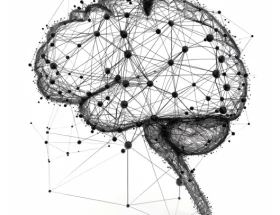
The study by Wedel, Pieters, and van der Lans (2023) reviews advancements in modeling eye movements to understand decision-making processes. Eye tracking offers valuable insights into perceptual and cognitive mechanisms, making it a powerful tool for studying how individuals evaluate and make decisions.
Background
Eye movement studies have been instrumental in psychology and behavioral economics, providing a window into how attention and cognition shape decision-making. This review highlights the development of psychometric and econometric models that link eye movements to task complexity and individual strategies. The authors present a framework that considers how task demands and strategic shifts influence gaze patterns.
Key Insights
Patterns in Eye Movements: The study categorizes how specific gaze patterns correspond to distinct cognitive tasks, shedding light on how individuals prioritize and process information.
- Integration of Cognitive and Perceptual Models: The authors outline how recent models combine perceptual inputs with cognitive strategies, offering a nuanced view of decision-making processes.
- Patterns in Eye Movements: The study categorizes how specific gaze patterns correspond to distinct cognitive tasks, shedding light on how individuals prioritize and process information.
- Challenges in Current Models: While the authors emphasize progress, they also suggest that existing models could benefit from addressing limitations, such as accounting for variability in individual decision strategies.
Significance
This review consolidates current knowledge in the field and highlights eye tracking as a valuable methodology for uncovering the complexities of decision-making. By linking eye movements to cognitive and perceptual processes, it reinforces the importance of integrating data-driven models with theoretical frameworks. However, the article would benefit from a more balanced critique of the challenges that researchers face, such as methodological constraints or gaps in existing models.
Future Directions
The authors call for more detailed psychometric approaches to improve the precision and applicability of eye movement models. They suggest expanding research to include diverse decision-making contexts and integrating data from larger populations to enhance generalizability. These efforts could refine the understanding of how cognitive processes adapt to different task demands.
Conclusion
The study by Wedel et al. (2023) serves as a thorough review of recent advancements in modeling eye movements and their relationship to decision-making. It highlights the progress made while acknowledging areas for future exploration. Eye tracking remains a promising tool for advancing theories of cognition and behavior, offering new possibilities for both research and practical applications.
Reference:
Wedel, M., Pieters, R., & van der Lans, R. (2023). Modeling Eye Movements During Decision Making: A Review. Psychometrika, 88(2), 697-729. https://doi.org/10.1007/s11336-022-09876-4
Post-COVID Cognitive Effects: What Longitudinal Research Shows
The cognitive sequelae of COVID-19 infection have become one of the most actively researched areas in neuropsychology. Initial reports of “brain fog” — characterized by difficulty concentrating, memory problems, and slowed processing speed — prompted systematic investigation using standardized cognitive assessments.
Key Takeaways
- Encouragingly, longitudinal follow-up suggests that most cognitive deficits improve over 12-24 months, though a subset of patients experience persistent symptoms.
- The study by Wedel, Pieters, and van der Lans (2023) reviews advancements in modeling eye movements to understand decision-making processes.
- (2023) serves as a thorough review of recent advancements in modeling eye movements and their relationship to decision-making.
- Psychometrika, 88(2), 697-729.
Large-scale studies from the UK Biobank, which had pre-infection cognitive baselines for thousands of participants, provided some of the strongest evidence. These studies documented small but statistically significant declines in processing speed and executive function even after mild infections, with effects equivalent to approximately 3 IQ points on average. More severe infections, particularly those requiring hospitalization, were associated with larger deficits.
The mechanisms underlying post-COVID cognitive dysfunction likely involve multiple pathways: direct viral neuroinvasion, systemic inflammation causing neuroinflammation, microclot formation disrupting cerebral microcirculation, and autoimmune processes affecting neural tissue. Encouragingly, longitudinal follow-up suggests that most cognitive deficits improve over 12-24 months, though a subset of patients experience persistent symptoms. Ongoing research is investigating whether cognitive rehabilitation, anti-inflammatory treatments, and physical exercise can accelerate recovery.
Recovery and Rehabilitation Strategies
For individuals experiencing post-COVID cognitive symptoms, evidence-based rehabilitation strategies include structured cognitive rehabilitation (progressive exercises targeting attention, memory, and executive function), graded aerobic exercise (starting at low intensity and gradually increasing), sleep hygiene optimization, and stress management techniques. Neuropsychological assessment can help identify specific cognitive domains affected and guide targeted intervention.
Importantly, patients should be reassured that the majority of post-COVID cognitive deficits improve over 12-24 months, even without specific intervention. However, persistent symptoms beyond 6 months warrant formal evaluation to rule out other contributing factors (depression, anxiety, sleep disorders, medication effects) and to initiate structured rehabilitation. Emerging research on anti-inflammatory treatments, anticoagulants for microclot dissolution, and neuromodulation techniques offers hope for accelerated recovery in treatment-resistant cases.
Frequently Asked Questions
Does higher intelligence protect against misinformation?
Research shows a complex relationship. Higher cognitive ability is associated with better analytical thinking and detection of logical fallacies. However, intelligent individuals can also be more skilled at rationalizing beliefs they’re motivated to hold. Critical thinking skills and intellectual humility appear more protective than raw intelligence against misinformation susceptibility.
What can eye movements reveal about cognition?
Eye tracking research shows that eye movements reflect real-time cognitive processing, including attention allocation, information integration, and decision-making strategies. Fixation patterns, saccade timing, and pupil dilation provide windows into cognitive load, comprehension, and even early signs of cognitive decline.
People Also Ask
What are rotation local solutions in multidimensional item response models?
Nguyen and Waller’s (2024) study provides an in-depth analysis of factor-rotation local solutions (LS) within multidimensional, two-parameter logistic (M2PL) item response models. Through an extensive Monte Carlo simulation, the research evaluates how different factors influence rotation algorithms’ performance, contributing to a deeper understanding of multidimensional psychometric models.
Read more →What are cognitive ability and optimism bias?
This post examines findings from Chris Dawson’s research on the connection between cognitive ability and optimism bias in financial decision-making. Using data from over 36,000 individuals in the U.K., the study highlights how cognitive ability influences unrealistic optimism, particularly in financial expectations versus actual outcomes.
Read more →What are decision acuity and its impact on mental health?
Moutoussis et al. (2021) introduce "decision acuity" as a measurable cognitive construct distinct from intelligence quotient (IQ). Their research investigates how decision acuity relates to mental health, social functioning, and brain connectivity, offering new insights into the interplay between cognition and psychopathology.
Read more →Why is background important?
Eye movement studies have been instrumental in psychology and behavioral economics, providing a window into how attention and cognition shape decision-making. This review highlights the development of psychometric and econometric models that link eye movements to task complexity and individual strategies. The authors present a framework that considers how task demands and strategic shifts influence gaze patterns.
How does key insights work in practice?
Integration of Cognitive and Perceptual Models: The authors outline how recent models combine perceptual inputs with cognitive strategies, offering a nuanced view of decision-making processes. Patterns in Eye Movements: The study categorizes how specific gaze patterns correspond to distinct cognitive tasks, shedding light on how individuals prioritize and process information. Challenges in
Why does significance matter in psychology?
This review consolidates current knowledge in the field and highlights eye tracking as a valuable methodology for uncovering the complexities of decision-making. By linking eye movements to cognitive and perceptual processes, it reinforces the importance of integrating data-driven models with theoretical frameworks. However, the article would benefit from a more balanced critique of the challenges that researchers face, such as methodological constraints or gaps in existing models.