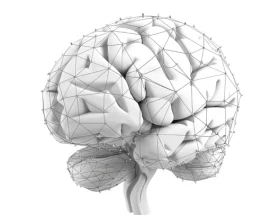
Price, Mazzocco, and Ansari (2013) conducted a study to investigate the brain mechanisms involved in mental arithmetic and their connection to high school math performance. By examining brain activity during single-digit calculations, the researchers highlighted how specific neural patterns relate to mathematical competence, measured through PSAT math scores. This work contributes to understanding the neural basis of mathematical ability.
Background
Arithmetic skills play a foundational role in mathematics, linking procedural fluency to higher-level problem-solving abilities. The study by Price et al. aimed to determine whether brain activation patterns during simple arithmetic could predict mathematical performance in high school. Using fMRI technology, the researchers explored how different brain regions engage during mental calculations and how this correlates with PSAT scores.
Key Insights
- Neural Correlates of Math Performance: Higher PSAT math scores were associated with greater activation in the left supramarginal gyrus and bilateral anterior cingulate cortex, areas linked to arithmetic fact retrieval.
- Role of Numerical Processing Regions: Increased activation in the right intraparietal sulcus, a region involved in quantity processing, was associated with lower PSAT math scores, suggesting less reliance on procedural strategies may be beneficial for high performance.
- Importance of Arithmetic Fluency: The findings emphasize the significance of mental arithmetic as a predictor of broader mathematical competence, reinforcing its role in educational practices.
Significance
The study sheds light on how brain mechanisms underpin individual differences in mathematical abilities. It highlights the importance of balancing procedural and memory-based strategies in arithmetic education. By identifying neural markers of performance, this research opens pathways for designing interventions to enhance mathematical skills, particularly in students struggling with arithmetic fluency.
Future Directions
While the findings provide valuable insights, the study’s small sample size limits generalizability. Future research could expand to larger, more diverse populations to validate these results. Additionally, longitudinal studies would help track how brain activation patterns develop over time and explore the impact of targeted educational interventions on improving mental arithmetic skills and overall mathematical performance.
Conclusion
This research by Price et al. (2013) demonstrates the close relationship between neural activity during arithmetic and high school-level math performance. By advancing our understanding of the brain’s role in mathematical ability, the study provides meaningful insights for educators and researchers aiming to support students in achieving their full mathematical potential.
Reference
Price, G. R., Mazzocco, M. M. M., & Ansari, D. (2013). Why Mental Arithmetic Counts: Brain Activation during Single Digit Arithmetic Predicts High School Math Scores. Journal of Neuroscience, 33(1), 156-163. https://doi.org/10.1523/JNEUROSCI.2936-12.2013
Related Research
Traumatic Brain Injury and Cognition
Every year roughly 69 million people worldwide sustain a traumatic brain injury (TBI), and the question survivors and families ask first is rarely about scans…
Apr 3, 2026Loneliness and Cognitive Decline
The brain is, more than anything else, a social organ. Roughly 85 billion neurons evolved primarily to navigate other minds — to recognize faces, infer…
Apr 1, 2026Mediterranean Diet and Brain Health
The Mediterranean diet has been linked to lower rates of heart disease, diabetes, and cancer. But an expanding body of research suggests its benefits extend…
Jan 26, 2026How Air Pollution Affects the Brain
We worry about air pollution's effects on our lungs and hearts. But a growing body of research reveals an even more alarming target: the brain.…
Jan 6, 2026How Pregnancy Diet Affects Baby's Brain
The nine months of pregnancy are the most consequential window of brain development in human life. Roughly 100 billion neurons are produced before birth, alongside…
Sep 7, 2025People Also Ask
What are hidden harm: prenatal phthalate exposure and its impact on young brains?
Ghassabian et al. (2023) provide a detailed analysis of the relationship between prenatal exposure to phthalates and its potential effects on brain development and cognitive outcomes in children. Using data from the Generation R study, the research explores how exposure during pregnancy may influence brain volume and IQ scores in adolescence.
Read more →What is cognitive and brain development through galamms?
Sørensen, Fjell, and Walhovd’s 2023 research introduces Generalized Additive Latent and Mixed Models (GALAMMs), a methodological advancement designed for analyzing complex clustered data. This approach holds particular relevance for cognitive neuroscience, offering robust tools for examining how cognitive and neural traits develop over time.
Read more →What are early-life penicillin exposure: gut microbiome and brain gene expression?
Volkova et al. (2021) investigated the effects of early-life exposure to low-dose penicillin on the gut microbiome and gene expression in brain regions critical for neurodevelopment. Using a mouse model, the study provides important insights into how antibiotics may influence the gut-brain axis and potentially contribute to neurodevelopmental disorders.
Read more →What are impact of early ssri treatment on cognitive and brain development in 22q11.2 deletion syndrome?
This study by Mancini et al. (2021) examines how early treatment with selective serotonin reuptake inhibitors (SSRIs) affects cognition and brain development in individuals with 22q11.2 deletion syndrome (22q11DS). This syndrome is associated with a high risk for schizophrenia, making it an important focus for research into psychosis and its developmental impacts. The authors conducted a retrospective cohort study to assess long-term outcomes related to cognitive function and brain structure.
Read more →Why is background important?
Arithmetic skills play a foundational role in mathematics, linking procedural fluency to higher-level problem-solving abilities. The study by Price et al. aimed to determine whether brain activation patterns during simple arithmetic could predict mathematical performance in high school. Using fMRI technology, the researchers explored how different brain regions engage during mental calculations and how this correlates with PSAT scores.
How does key insights work in practice?
Neural Correlates of Math Performance: Higher PSAT math scores were associated with greater activation in the left supramarginal gyrus and bilateral anterior cingulate cortex, areas linked to arithmetic fact retrieval. Role of Numerical Processing Regions: Increased activation in the right intraparietal sulcus, a region involved in quantity processing, was associated with
Sharma, P. (2013, January 4). How Mental Arithmetic Affects High School Math Performance. PsychoLogic. https://www.psychologic.online/brains-math-potential-how-mental-arithmetic-affects-high-school-math-performance/