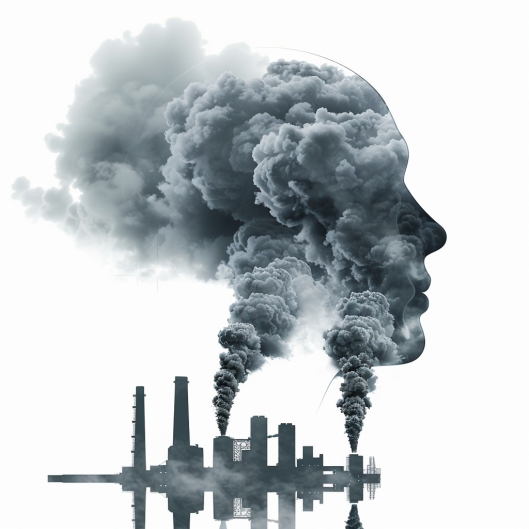
For decades, the public conversation about air pollution focused on lungs and hearts. Over the last fifteen years, evidence has accumulated that the brain — and especially the developing brain — is also a vulnerable target. The most useful summary of the current evidence: even at fine particulate (PM2.5) concentrations below current U.S. regulatory limits, exposure is associated with measurable IQ loss in children, with effect sizes that are small per individual but substantial when multiplied across a population. A 2024 meta-analysis pegs the average effect at roughly −0.27 IQ points per 1 µg/m³ of PM2.5 exposure — a number that translates, at U.S. urban exposure levels, into millions of population IQ points lost.
The headline number, and what it actually means
The 2024 meta-analysis by Alter, Whitman, Bellinger, and Landrigan in Environmental Health pooled six studies meeting strict inclusion criteria — covering 4,860 children across North America, Europe, and Asia, with cognitive testing at a mean age of 8.9 years. The headline result:
- −0.27 Full-Scale IQ points per 1 µg/m³ PM2.5 (p < 0.001).
- −0.39 Performance IQ points per 1 µg/m³ — the visuospatial and processing-speed-heavy components of IQ are most affected.
- −0.24 Verbal IQ points per 1 µg/m³ — verbal abilities also affected, but slightly less.
Two ways to scale this:
Per individual, the effect is small. A child living in a U.S. urban area with PM2.5 averaging 12 µg/m³ — roughly the EPA standard — versus a counterfactual of 5 µg/m³ (WHO guideline) experiences roughly 7 × 0.27 ≈ 1.9 IQ points of difference, well within the standard error of any IQ measurement.
Per population, the effect is large. A small left-shift of an entire IQ distribution removes a disproportionate share of the right tail. A 5-point downward shift in mean IQ roughly halves the population fraction above 130 (the conventional “superior intelligence” cutoff). The same logic in reverse: even a modest reduction in mean IQ adds substantially to the count of children at the low-functioning end of the curve.
This individual-versus-population asymmetry is the key to interpreting the air-pollution-and-IQ literature. The effects look small at the case level; they look large at the policy level.
The Massachusetts community-level analysis
The 2022 Landrigan et al. study in Environmental Health illustrates this scaling problem at state level. The authors used the EPA’s Environmental Benefits Mapping and Analysis (BenMAP-CE) software combined with state-level data to quantify PM2.5‘s impact on disease, death, and child cognitive function in every Massachusetts city and town in 2019.
The exposure context: Massachusetts’s 2019 statewide annual mean PM2.5 was 6.3 µg/m³ — below the U.S. EPA’s standard of 12 µg/m³ but above the WHO guideline of 5 µg/m³. This is, by U.S. standards, a relatively clean state. The findings even at this exposure level:
- Adults: 2,780 deaths attributable to PM2.5 exposure (95% CI 2,726–2,853), including 1,677 cardiovascular deaths, 2,185 lung cancer deaths, 200 stroke deaths, and 343 chronic respiratory deaths.
- Children: 308 low-weight births, 15,386 asthma cases, and a provisionally estimated loss of nearly 2 million Performance IQ points across the state’s child population.
- Equity: Air-pollution-related disease, death, and IQ loss were most severe in low-income and minority communities, but they occurred in every city and town regardless of demographics or median family income.
The methodological contribution of the paper is that the analysis is replicable: it uses publicly available EPA software, public emissions and concentration data, and published concentration-response coefficients to translate ambient PM2.5 into local health and cognitive impacts. Other states, regions, or municipalities can run the same analysis on their own data.
When in development does exposure matter most?
The IQ-loss meta-analysis pools studies across exposure windows. A more granular question is whether prenatal, early-childhood, or school-age exposure carries the greatest risk. The literature has tested all three:
Prenatal exposure. Cowell and colleagues’ 2015 PLOS ONE study examined prenatal exposure to black carbon — a marker of traffic and combustion pollution — in a U.S. urban cohort. They found associations with later memory deficits, with the pattern modified by both sex and prenatal stress. Prenatal exposure appears to be a sensitive window, and effects are not uniform across children: stress and sex moderate the impact.
School-age exposure. Sunyer and colleagues’ 2015 study in PLOS Medicine tracked over 2,000 primary-school children in Barcelona over 12 months. Children attending schools in higher-pollution locations showed slower cognitive development on standardized tests of working memory and attention than children at lower-pollution schools, after extensive adjustment for confounders. The school environment — where children spend a substantial fraction of their waking hours during critical developmental years — emerged as a meaningful exposure setting.
Multi-pollutant exposure with sex differences. A 2026 study by Kou, Canals, and Arija in the European Journal of Pediatrics examined 286 preschoolers using the Wechsler Preschool and Primary Scale of Intelligence (WPPSI-IV), exposed to mixtures of traffic-related pollutants (PM2.5, PM10, NO2, NOx, O3) at their schools. Two findings stand out:
- PMcoarse and PM10 are inversely associated with the Working Memory Index. The coefficients were β = −2.71 (95% CI −4.23, −1.20) and β = −2.39 (95% CI −4.09, −0.70) respectively — clinically meaningful effect sizes.
- Sex differences emerge for different cognitive domains. The pollutant-mixture analysis using weighted quantile sum (WQS) regression found stronger associations with lower working memory in boys (β = −3.32, 95% CI −5.77, −0.88) and lower verbal comprehension in girls. The mixture as a whole showed an estimate of β = −3.60 (95% CI −5.92, −1.28) on the working memory index, with PMcoarse the dominant contributor.
The picture across exposure windows: pollution affects developing cognition throughout the developmental period, and different windows may produce different cognitive signatures, with sex moderating the pattern in ways that are not fully understood.
Mechanisms: how could air pollution affect the brain?
Several biological mechanisms are biologically plausible and supported by animal and human imaging studies:
- Translocation across the olfactory and blood-brain barriers. Ultrafine particles are small enough to enter the brain directly through olfactory pathways and through compromised blood-brain barriers, depositing in cortical and subcortical regions.
- Neuroinflammation. Pollution-related particles trigger microglial activation and inflammatory cascades in the brain, observable in autopsy studies of children chronically exposed to high-pollution environments.
- Oxidative stress. Particulate matter promotes reactive oxygen species production in neural tissue, with knock-on effects on synaptic function and neurogenesis.
- Indirect cardiovascular pathways. Pollution-associated cardiovascular changes, including reduced cerebral blood flow, can affect cognitive function independent of direct neural effects.
These mechanisms operate at different timescales and respond differently to interventions, which complicates the picture but also creates multiple potential targets for prevention.
Why effects appear at “safe” levels
A counterintuitive feature of the air-pollution-cognition literature is that effects are detectable at exposures below regulatory standards. Three reasons explain this:
- Regulatory standards are set with a margin and on a different basis. The U.S. EPA’s PM2.5 standard was historically set primarily on cardiovascular and respiratory mortality grounds. Cognitive endpoints were not central to the standard-setting process.
- The dose-response curve appears linear without a threshold. The IQ-loss meta-analysis and several individual studies report monotonic effects extending well below regulatory cutoffs, with no evidence of a “safe” level below which effects vanish.
- Population exposure averages mask short-term peaks. Even in jurisdictions meeting average standards, brief high-exposure events (wildfires, traffic congestion, industrial incidents) can produce neurodevelopmentally relevant exposures that the annual average obscures.
The WHO’s 2021 update to its air quality guidelines lowered the recommended PM2.5 guideline from 10 to 5 µg/m³, partly in response to the cumulative neurodevelopmental and other below-threshold evidence. Most national regulatory standards, including the EPA’s, remain higher.
Practical implications
For parents and policy:
- The cognitive-effects evidence strengthens the case for stricter standards. Cardiovascular and respiratory effects alone justify current and tighter regulation. Cognitive effects compound the case.
- Local exposure varies dramatically. School siting, residential proximity to highways, and combustion sources in the home (gas stoves, wood fires, candles, smoking) all matter. Children’s actual exposure may diverge substantially from the regional average.
- Indoor air quality is part of the story. Most cognitive-and-pollution studies measure ambient outdoor exposure; indoor environments where children spend substantial time can have higher PM2.5 from cooking, heating, and combustion sources. Ventilation and HEPA filtration meaningfully reduce indoor particle concentrations.
- The effect sizes are real but bounded. No single child’s IQ trajectory is determined by air pollution. Genetics, education, nutrition, social environment, and many other factors operate on the same outcome with comparable or larger effect sizes. Pollution is one input, not the dominant one.
- Equity matters. Both Landrigan et al. (Massachusetts) and the broader literature show pollution exposure and its cognitive effects concentrate disproportionately in lower-income and minority communities. Pollution-control policy is also social policy.
What the evidence does not yet settle
Several questions remain genuinely open:
- Causal vs. confounded. Most studies are observational. Residual confounding by socioeconomic status, indoor environment, and co-exposures cannot be fully ruled out, even with careful adjustment.
- Pollutant specificity. Many studies bundle pollutants under “PM2.5,” but the chemical composition (heavy metals, organic compounds, sulfates, nitrates) varies by source. Whether the cognitive effect is specific to certain components or driven by the particles in general is incompletely resolved.
- Long-term trajectories. Whether childhood IQ effects translate into adult cognitive outcomes, or whether early pollution exposure accelerates later-life cognitive decline, is still being investigated.
- Reversibility. Whether reducing exposure mid-childhood can reverse early deficits is largely unknown.
- Sex-specific mechanisms. Multiple studies report sex-modified effects, but the mechanistic explanation — hormonal, neurodevelopmental timing, behavioral exposure differences — is not established.
Frequently Asked Questions
How much does air pollution lower IQ?
The 2024 meta-analysis estimates −0.27 Full-Scale IQ points per 1 µg/m³ of PM2.5. In a U.S. urban setting averaging 12 µg/m³, that is roughly 2–3 IQ points relative to a clean-air counterfactual. Per child the effect is small; per population it is substantial.
Is air pollution worse for IQ at any particular age?
Effects appear at prenatal, early-childhood, and school-age exposure windows. Cowell et al. (2015) and others suggest the prenatal window is sensitive; Sunyer et al. (2015) and Kou et al. (2026) show meaningful school-age effects. There is no single “critical period” — exposure across development matters.
Why does air pollution affect performance IQ more than verbal IQ?
Performance IQ relies on processing speed, visuospatial reasoning, and working memory — abilities that have shown the most consistent associations with pollution exposure in the meta-analytic literature. Verbal abilities, more buffered by language exposure and education, are less affected.
Is air pollution at EPA-compliant levels safe for children’s brains?
The evidence suggests not. Effects are detectable at exposures below current EPA standards, and the dose-response curve does not appear to have a safe threshold. The WHO guideline of 5 µg/m³ is more conservative than U.S. national standards.
Does indoor air filtration help?
HEPA-rated filtration meaningfully reduces indoor PM2.5 concentrations, particularly relevant when outdoor pollution is elevated (wildfire seasons, urban inversions). The cognitive-outcome studies have not directly tested filtration interventions, but the exposure reduction is real.
Should I move my family to escape air pollution?
Local exposure varies more by school siting and home location than by region. Within most populated areas, distance from major highways and proximity to industrial sources matter more than the ZIP code average. Moving across a major highway can reduce exposure substantially without relocating to a new region.
Are these IQ losses permanent?
Whether the cognitive effects observed at testing ages 6–14 persist into adulthood is not yet definitively established. Plausible mechanisms (neuroinflammation, neurogenesis disruption) suggest at least partial persistence; whether reduced subsequent exposure allows recovery is not directly demonstrated.
References
- Landrigan, P. J., Fisher, S., Kenny, M. E., Gedeon, B., Bryan, L., Mu, J., & Bellinger, D. (2022). A replicable strategy for mapping air pollution’s community-level health impacts and catalyzing prevention. Environmental Health, 21(1), 70. https://doi.org/10.1186/s12940-022-00879-3
- Alter, N. C., Whitman, E. M., Bellinger, D. C., & Landrigan, P. J. (2024). Quantifying the association between PM2.5 air pollution and IQ loss in children: a systematic review and meta-analysis. Environmental Health, 23(1), 101. https://doi.org/10.1186/s12940-024-01122-x
- Sunyer, J., Esnaola, M., Alvarez-Pedrerol, M., Forns, J., Rivas, I., López-Vicente, M., Suades-González, E., Foraster, M., Garcia-Esteban, R., Basagaña, X., Viana, M., Cirach, M., Moreno, T., Alastuey, A., Sebastian-Galles, N., Nieuwenhuijsen, M., & Querol, X. (2015). Association between Traffic-Related Air Pollution in Schools and Cognitive Development in Primary School Children: A Prospective Cohort Study. PLOS Medicine, 12(3), e1001792. https://doi.org/10.1371/journal.pmed.1001792
- Cowell, W. J., Bellinger, D. C., Coull, B. A., Gennings, C., Wright, R. O., & Wright, R. J. (2015). Associations between Prenatal Exposure to Black Carbon and Memory Domains in Urban Children: Modification by Sex and Prenatal Stress. PLOS ONE, 10(11), e0142492. https://doi.org/10.1371/journal.pone.0142492
- Kou, X., Canals, J., & Arija, V. (2026). Air pollution mixtures and cognitive outcomes in children: associations with school-age exposure and sex differences. European Journal of Pediatrics, 185(4). https://doi.org/10.1007/s00431-026-06841-6
Related Research
Does Music Training Increase IQ? What the Research Actually Shows
Few claims in popular science are as persistent as the idea that music makes you smarter. From the "Mozart Effect" craze of the 1990s —…
Apr 15, 2026Working Memory: Why It Matters More Than You Think
Every time you hold a phone number in mind while searching for a pen, follow a multi-step recipe, or mentally compare two arguments in a…
Apr 13, 2026The G Factor: What General Intelligence Really Means
In 1904, Charles Spearman noticed something that would reshape the study of intelligence for the next century: children who scored well on one type of…
Apr 10, 2026Sleep Deprivation and Cognitive Performance: What One Bad Night Does to Your Brain
In 1999, researchers at the University of New South Wales made a startling discovery: people who had been awake for 17–19 hours performed on cognitive…
Apr 8, 2026Mindfulness and Cognitive Performance: Does Meditation Actually Make You Smarter?
Meditation has entered the mainstream. From corporate boardrooms to elementary schools, from military training to clinical therapy, mindfulness practices are promoted as cognitive enhancers that…
Apr 6, 2026People Also Ask
What are the link between physical activity and cognitive health?
Recent research highlights how everyday physical activity can benefit cognitive health. A study by Hakun et al. (2024) examined the short-term effects of regular physical activity on mental processing speed and working memory. Using real-time assessments, the study provides new insights into how light and moderate physical activities can promote brain health in middle-aged adults.
Read more →What are sensorimotor variability and early cognition?
A recent study by Denisova and Wolpert (2024) investigates how early sensorimotor features relate to cognitive differences in toddlers diagnosed with autism spectrum disorder (ASD). By examining over 1,000 children with varying IQ levels, the researchers reveal how sensorimotor variability impacts behaviors linked to autism, providing valuable insights for individualized interventions.
Read more →What are distinct genetic and environmental origins of hierarchical cognitive abilities in adult humans?
Understanding how genetic and environmental influences shape cognitive abilities remains a cornerstone of psychological research. Jiang et al. (2024) present an important study that examines these influences through a structured twin-based model. This research provides insight into how basic and higher-order cognitive functions are differentially affected by genetic inheritance and shared experiences.
Read more →What are shaping hierarchical cognitive abilities?
Recent research by Jiang et al. (2024) sheds light on the distinct genetic and environmental influences shaping hierarchical cognitive abilities in adults. By categorizing cognitive functions into two levels—basic processes and higher-order functions—this study provides valuable insights into how these abilities develop and differ in their origins.
Read more →Why is background important?
The study builds on existing research linking air pollution to adverse health outcomes. Historically, efforts to quantify these effects have focused on areas with severe pollution. Landrigan et al. shift the focus to communities where pollution levels fall within regulatory limits but still pose risks. Their use of state-specific data and advanced analysis tools makes their findings particularly relevant for local policy planning.
How does key insights work in practice?
Health Impacts of PM2.5: The study identifies significant health outcomes associated with PM2.5 pollution, including 2780 deaths, 308 low-weight births, and 15,386 asthma cases in Massachusetts during 2019. Cognitive Effects: Exposure to PM2.5 was linked to an estimated loss of nearly 2 million Performance IQ points in children, underscoring the broader
Sharma, P. (2022, July 18). Assessing Air Pollution’s Impact on Health and Cognitive Function. PsychoLogic. https://www.psychologic.online/2022/07/18/air-pollution-health-intelligence-impact/