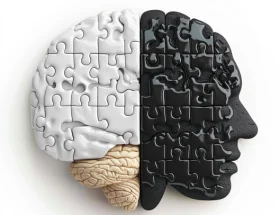
For about a century, average IQ test scores in industrialized countries rose steadily — roughly three points per decade — across cohort after cohort. James Flynn documented and named the phenomenon. The puzzle was how a population could be getting genuinely smarter so fast, when biological evolution operates on a much slower timescale. The answer the field converged on was environmental: better nutrition, more schooling, smaller families, more abstract problem-solving in everyday life. Recently, the picture has changed. In several developed countries, the rise has stalled or reversed. The most rigorous available evidence — including a 2018 Norwegian study using sibling comparisons — indicates that the reversal is environmentally caused too. The cognitive trajectory of modern populations is not a steady upward arc. It is a complex pattern that varies by country, by cognitive domain, and by birth cohort.
What the Flynn effect actually is
The Flynn effect refers to the secular rise in performance on standardized intelligence tests across the 20th century. Pietschnig and Voracek’s 2015 meta-analysis in Perspectives on Psychological Science formalized the global picture: pooling 271 independent samples totaling nearly 4 million participants from 31 countries, they estimated annual IQ gains of approximately:
- 0.41 IQ points per year for fluid reasoning (the largest gain)
- 0.30 points per year for spatial ability
- 0.28 points per year for full-scale IQ
- 0.21 points per year for crystallized (verbal-knowledge) ability (the smallest gain)
Gains were larger for adults than for children and showed signs of slowing in more recent decades. The differential by domain is informative: the gains were not uniform across cognitive abilities. Fluid reasoning — abstract pattern-finding and problem-solving on novel material — gained the most. Crystallized abilities tied to accumulated knowledge gained the least. This pattern by itself rules out simple “people just know more” explanations and points toward something more specific about how modern cognition was shaped.
The reversal: where it has appeared
The Flynn-effect literature now includes substantial evidence that the rising trajectory has slowed, stopped, or reversed in several developed countries since roughly the late 1990s. The most rigorous demonstration comes from Bratsberg and Rogeberg’s 2018 study in PNAS, using Norwegian administrative records covering three decades of male birth cohorts who took compulsory military intelligence tests. The study has two unusual strengths:
- Population-scale data with family information. Every Norwegian male is tested, and birth records link siblings.
- Within-family analysis. By comparing the cognitive scores of siblings born at different times, the authors could recover the Flynn rise, the turning point in the mid-1990s, and the subsequent decline using only within-family variation.
The within-family design is critical because it rules out a class of explanations based on changing population composition. Differential immigration, differential fertility across sub-populations, and the so-called “dysgenic” hypothesis (that lower-IQ parents have more children) all predict cohort-level changes that should disappear when comparing siblings. The Bratsberg and Rogeberg analysis shows that the Flynn rise and the recent decline both persist within families. Whatever is driving the changes operates on individuals as they grow up, not on which individuals happen to be in the population.
The authors’ conclusion: both the Flynn effect and its reversal are environmentally caused. The same machinery that drove the rise is now driving the decline.
The U.S. evidence: domain-specific declines
Dworak, Revelle, and Condon’s 2023 study in Intelligence analyzed cognitive ability data from 394,378 U.S. adults in the Synthetic Aperture Personality Assessment (SAPA) Project, covering 2006–2018. Despite the methodological differences between an online research participant sample and a compulsory national test, the U.S. picture echoes the European one in important ways:
- Composite ability scores declined over the 13-year window, consistent with a reversed Flynn effect.
- Matrix reasoning and letter-number series declined, mirroring the abstract-reasoning patterns seen in European data.
- Three-dimensional rotation scores increased — one cognitive domain in which the population continues to gain.
- Verbal reasoning showed flat trajectories, with slopes not reaching statistical significance.
The pattern that emerges across both U.S. and European data is consistent: it is not a uniform decline, but a domain-specific one. The cognitive abilities most associated with the original Flynn rise — abstract fluid reasoning, novel-material problem-solving — are now the ones declining. The abilities historically least responsive to the Flynn effect — crystallized verbal knowledge — are the most stable. And at least one specifically perceptual ability (3D rotation) continues to gain.
The “decreasing positive manifold” hypothesis
A 2024 study by Andrzejewski, Oberleiter, Vetter, and Pietschnig in Journal of Intelligence introduces a more granular interpretation. Using IQ standardization data from 1,392 Austrian residents tested between 2005 and 2018, the authors found:
- Positive Flynn effects across all subtest domains with effect sizes ranging from Cohen’s d = 0.21 to 0.91 — the population is, in this Austrian sample, still gaining IQ on most domains.
- A trend toward weaker positive manifold strength. The proportion of variance accounted for by a single g factor moved from R² = .908 to R² = .892 across the period.
The change in manifold strength was not statistically significant in the Austrian sample, but the direction is consistent with a hypothesis that has gained traction in the recent literature: increasing ability differentiation. The proposal is that as populations and educational systems become more specialized, individuals develop sharper cognitive profiles — strong in some domains, weaker in others — rather than uniform g-driven performance. A weaker positive manifold would manifest as inconsistent Flynn-effect trajectories across domains, which is exactly what the recent global data show.
If correct, this reframes the “Flynn reversal” debate. It is not that populations are getting collectively dumber. It is that cognitive abilities are becoming less correlated with each other, so a single composite IQ score increasingly underrepresents what is going on at the domain level.
Mechanisms: what could be driving these changes?
The candidate explanations for the original Flynn rise are reasonably well-established:
- Improved nutrition in early childhood, particularly relevant for fluid abilities sensitive to early-life developmental conditions.
- Reduced infectious disease burden, including reduced exposure to pathogens that compromise neural development.
- Expanded and more cognitively demanding schooling, with increasing emphasis on abstract and analytical thinking.
- Smaller family sizes, allowing more parental cognitive investment per child.
- Cognitively demanding modern environments, requiring abstract problem-solving in everyday life and work.
Candidate explanations for the recent reversal include:
- Changes in education quality and content. A shift in pedagogy that affects abstract reasoning skills more than other cognitive domains.
- Reduced reading and increased screen-based media consumption. The transition from text to short-form video and image-heavy media may differentially affect verbal and analytic abilities.
- Attention and working memory effects of digital environments. Tentative evidence that constant attention switching may affect sustained cognitive performance.
- Saturation of the original drivers. Once nutrition, schooling, and pathogen reduction approach a ceiling, further gains require new mechanisms.
- Sample-composition effects. Some apparent declines reflect changes in who takes the tests, though Bratsberg and Rogeberg’s within-family design specifically rules this out for Norway.
None of these explanations is firmly established. Each has supportive evidence and counter-evidence. The honest answer is that the field has multiple plausible candidates and no decisive way yet to weight them.
The scale of the SPM evidence
For a sense of how much data the Flynn-effect literature now rests on: Wongupparaj, Wongupparaj, Morris, and Kumari’s 2023 meta-analysis in Intelligence pooled 1,000 samples and 300,000 individual scores on the Standard Progressive Matrices (SPM) — a single test — across roughly seventy years. This is, by the standards of any field, an enormous evidence base for a single instrument. The SPM-specific picture replicates the broader pattern: substantial 20th-century gains, with recent decade-by-decade trajectories that vary by country and that include several reversals.
Practical implications
Several practical points emerge:
- IQ test norms need regular updating. The Flynn effect was the original reason psychometricians realized that an unrenormed test gradually overestimates IQ. The recent reversal means that older norms may now underestimate IQ in some domains and over-estimate in others. Both directions of error are real.
- Composite IQ scores conceal domain-specific information. The decreasing positive manifold means a single FSIQ number now carries less information about specific abilities than it did a generation ago. Subtest-level interpretation is increasingly relevant.
- Cohort comparisons matter for clinical decisions. A child tested today and compared against norms developed in 2005 receives a different score than a child tested today against contemporary norms. This affects diagnostic threshold decisions for giftedness, learning disability, and intellectual disability.
- The “kids today” trope is partly real and partly wrong. Real: certain cognitive domains are declining in some populations. Wrong: this is not a uniform deterioration, and several abilities are stable or still rising.
- The research is ongoing and the picture is genuinely unsettled. The reversal has been documented for less than two decades; whether it is a temporary fluctuation, a long-term trend, or domain-specific noise is not yet clear.
What we don’t know
Several important questions remain open:
- Whether the reversal will continue. Two decades is a short time for cohort-level trend extrapolation.
- Whether the same mechanisms apply across countries. Some countries (Norway, Denmark, Finland, several others in Europe) show clear reversals; others (parts of Asia and Africa) continue to gain at rates similar to mid-20th-century Europe.
- How much of the reversal is “real” cognitive change versus measurement and motivation artifacts. Test-taking attitudes, online versus paper administration, and changes in who takes which tests can all produce apparent score changes that do not reflect underlying cognitive shifts.
- Whether interventions can reverse the reversal. Curriculum changes, screen-time interventions, and similar policy levers have been proposed but not rigorously tested at scale.
Frequently Asked Questions
Is the Flynn effect still happening?
It depends on the country and the cognitive domain. Globally, the rise has slowed. In several developed countries (Norway, Denmark, Finland, France, the Netherlands, parts of the U.S. and Germany) the trajectory has reversed for some abilities, particularly abstract reasoning. In other regions, gains continue.
Are people actually getting dumber?
Not in the sense the framing suggests. The reversed Flynn effect refers to small, domain-specific declines on certain cognitive tests across birth cohorts. These are population-scale signals, not statements about any individual. Other abilities are stable or rising.
Why is the reversal happening?
Several plausible explanations exist — changes in education, screen-based media, attention demands, saturation of the original gains — but no single mechanism is firmly established. The Bratsberg and Rogeberg PNAS study established that whatever is driving the change is environmental, not genetic.
Did James Flynn predict this?
Flynn himself was open to the possibility late in his career. His original explanations of the rising effect emphasized environmental factors, which are also what the reversal evidence now points to. The ideas that produced the original Flynn-effect framework remain the most plausible framework for understanding both directions of cognitive change.
Should I worry about my child’s cognitive development?
The cohort-level effects are far smaller than the individual differences within a cohort. A child’s cognitive development is shaped overwhelmingly by their specific environment, education, and opportunities. The Flynn-reversal data are useful for understanding population trends, not for individual planning.
What does this mean for IQ test norms?
Norms become outdated and must be periodically revised. The original Flynn effect made commercial test publishers regularly renorm tests upward. The recent mixed evidence means future renormings will likely need to be domain-specific, with some subtests shifting in opposite directions.
Is the reverse Flynn effect a measurement artifact?
Some of it might be — sample composition, test-taking effort, online versus paper administration, and other factors can produce apparent score changes. The Bratsberg and Rogeberg sibling-comparison design specifically rules out compositional explanations for the Norwegian data, but other studies are more vulnerable to artifact concerns.
References
- Dworak, E. M., Revelle, W., & Condon, D. M. (2023). Looking for Flynn effects in a recent online U.S. adult sample: Examining shifts within the SAPA Project. Intelligence, 98, 101734. https://doi.org/10.1016/j.intell.2023.101734
- Pietschnig, J., & Voracek, M. (2015). One Century of Global IQ Gains: A Formal Meta-Analysis of the Flynn Effect (1909–2013). Perspectives on Psychological Science, 10(3), 282–306. https://doi.org/10.1177/1745691615577701
- Bratsberg, B., & Rogeberg, O. (2018). Flynn effect and its reversal are both environmentally caused. Proceedings of the National Academy of Sciences, 115(26), 6674–6678. https://doi.org/10.1073/pnas.1718793115
- Andrzejewski, D., Oberleiter, S., Vetter, M., & Pietschnig, J. (2024). Increasing IQ Test Scores and Decreasing g: The Flynn Effect and Decreasing Positive Manifold Strengths in Austria (2005–2018). Journal of Intelligence, 12(12), 130. https://doi.org/10.3390/jintelligence12120130
- Wongupparaj, P., Wongupparaj, R., Morris, R. G., & Kumari, V. (2023). Seventy years, 1000 samples, and 300,000 SPM scores: A new meta-analysis of Flynn effect patterns. Intelligence, 98, 101750. https://doi.org/10.1016/j.intell.2023.101750
Related Research
Does Music Training Increase IQ?
Few claims in popular science have been as durable as the idea that music makes you smarter. The 1990s "Mozart Effect" sent pregnant women rushing…
Apr 15, 2026Working Memory: Why It Matters
Working memory is the cognitive system that holds a small amount of information in mind, briefly, in a way that allows you to use it.…
Apr 13, 2026The G Factor: What General Intelligence Means
The g factor — Charles Spearman's name for the common variance that runs through all cognitive tests — is the most replicated and the most…
Apr 10, 2026Sleep Deprivation and Cognitive Performance
Williamson and Feyer (2000), in Occupational and Environmental Medicine, ran a deceptively simple experiment: they kept healthy adults awake for 28 hours and tested their…
Apr 8, 2026Mindfulness and Cognitive Performance
Meditation has entered the mainstream cognitive-enhancement market. Corporate wellness programs, military training pipelines, schools, and clinics promote mindfulness as a way to sharpen attention, expand…
Apr 6, 2026People Also Ask
What are the link between physical activity and cognitive health?
Recent research highlights how everyday physical activity can benefit cognitive health. A study by Hakun et al. (2024) examined the short-term effects of regular physical activity on mental processing speed and working memory. Using real-time assessments, the study provides new insights into how light and moderate physical activities can promote brain health in middle-aged adults.
Read more →What are sensorimotor variability and early cognition?
A recent study by Denisova and Wolpert (2024) investigates how early sensorimotor features relate to cognitive differences in toddlers diagnosed with autism spectrum disorder (ASD). By examining over 1,000 children with varying IQ levels, the researchers reveal how sensorimotor variability impacts behaviors linked to autism, providing valuable insights for individualized interventions.
Read more →What are distinct genetic and environmental origins of hierarchical cognitive abilities in adult humans?
Understanding how genetic and environmental influences shape cognitive abilities remains a cornerstone of psychological research. Jiang et al. (2024) present an important study that examines these influences through a structured twin-based model. This research provides insight into how basic and higher-order cognitive functions are differentially affected by genetic inheritance and shared experiences.
Read more →What are shaping hierarchical cognitive abilities?
Recent research by Jiang et al. (2024) sheds light on the distinct genetic and environmental influences shaping hierarchical cognitive abilities in adults. By categorizing cognitive functions into two levels—basic processes and higher-order functions—this study provides valuable insights into how these abilities develop and differ in their origins.
Read more →Why is background important?
The concept of the Flynn effect was first introduced by James Flynn, who observed consistent gains in IQ test scores across generations. This trend has raised questions about the role of environmental, educational, and cultural changes in shaping cognitive abilities. The study by Dworak et al. contributes to this body of research by analyzing data from the Synthetic Aperture Personality Assessment (SAPA) Project, focusing on a diverse sample of 394,378 U.S. adults.
How does key insights work in practice?
Reversal of the Flynn Effect: The study found evidence of declining cognitive scores, termed a reversed Flynn effect, in composite ability scores and domain-specific measures such as matrix reasoning and letter-number series. These declines were observed across age, education, and gender groups between 2006 and 2018. Variability Across Cognitive Domains: While
Jouve, X. (2023, March 3). Trends in the Flynn Effect Over Time. PsychoLogic. https://www.psychologic.online/flynn-effect-trends/