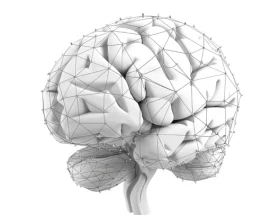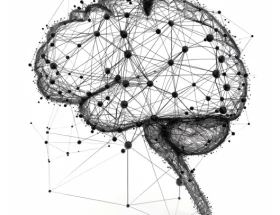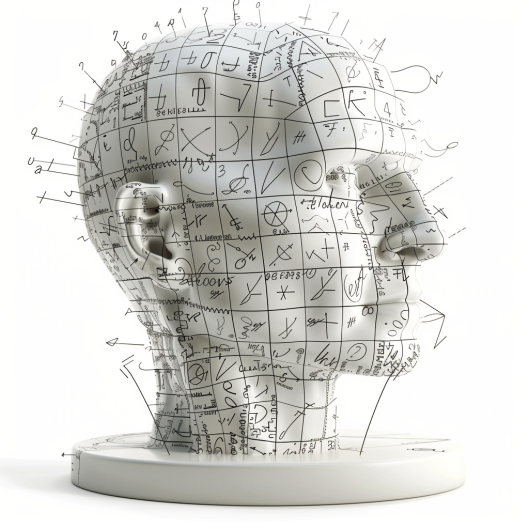
The Jouve-Cerebrals Figurative Sequences (JCFS) is a self-administered test designed to measure nonverbal cognitive abilities, focusing on pattern recognition and problem-solving. This post outlines the psychometric evaluation of the JCFS, emphasizing its reliability and practical applications while acknowledging areas for future development.
Background
The JCFS was developed to provide a targeted assessment of nonverbal cognitive strengths, offering an alternative to verbal-focused measures. Its initial evaluation employed both classical test theory (CTT) and item response theory (IRT), methods widely regarded for their effectiveness in assessing internal consistency and validity. The test also includes the Cerebrals Contest Figurative Sequences (CCFS) as a shorter, standalone assessment option.
Key Insights
Discriminatory Power: Results from the study highlighted the test's ability to differentiate effectively between individuals with varying cognitive strengths.
- Reliability: The JCFS demonstrated strong internal consistency across tested populations, making it a dependable tool for evaluating nonverbal cognitive abilities.
- Discriminatory Power: Results from the study highlighted the test’s ability to differentiate effectively between individuals with varying cognitive strengths.
- Limitations: The study identified areas for improvement, including the need for larger and more demographically diverse samples to enhance the generalizability of the findings.
Significance
The JCFS adds value to the existing suite of cognitive assessment tools by focusing on nonverbal abilities. This is particularly beneficial for individuals whose strengths may not be reflected in traditional verbal-centric tests. Its potential applications span clinical diagnostics, research, and educational settings, where a holistic understanding of cognitive abilities is crucial for informed decision-making.
Future Directions
Further studies are recommended to validate the JCFS in broader populations. Exploring the impact of demographic factors, such as age, cultural background, and educational level, would provide deeper insights into the test’s applicability. Additionally, integrating the JCFS with other assessment tools could enhance its utility in creating comprehensive cognitive profiles.
Conclusion
The JCFS represents a meaningful advancement in nonverbal cognitive assessment, combining robust psychometric properties with practical relevance. While there is room for further research and refinement, its initial success underscores its potential as a reliable tool in understanding and measuring cognitive diversity.
Reference:
Jouve, X. (2023). Psychometric Evaluation Of The Jouve Cerebrals Figurative Sequences As A Measure Of Nonverbal Cognitive Ability. Cogn-IQ Research Papers. https://pubscience.org/ps-1mSQY-6dcead-cugU
Modern Intelligence Testing: Principles and Practice
Intelligence testing has evolved significantly since Alfred Binet developed the first practical IQ test in 1905. Modern instruments like the Wechsler scales (WAIS-V for adults, WISC-V for children) and the Stanford-Binet Intelligence Scales (SB5) are built on decades of psychometric research, normative data collection, and factor-analytic refinement.
Contemporary IQ tests typically measure multiple cognitive domains organized according to the Cattell-Horn-Carroll (CHC) theory of cognitive abilities. Rather than producing a single number, they provide a profile of strengths and weaknesses across domains such as verbal comprehension, fluid reasoning, working memory, processing speed, and visual-spatial processing. This profile approach is more clinically useful than a single Full Scale IQ score, as it can identify specific learning disabilities, cognitive strengths, and patterns associated with various neurological conditions.
Test reliability — the consistency of measurement — is a critical quality indicator. Major IQ tests achieve internal consistency coefficients above 0.95 for composite scores and test-retest reliability above 0.90, making them among the most reliable instruments in all of psychology. However, reliability does not guarantee validity: ongoing research examines whether these tests adequately capture the full range of cognitive abilities valued across different cultures and contexts.
Frequently Asked Questions
What is cognitive ability?
Cognitive ability refers to the brain’s capacity to process information, learn from experience, reason abstractly, solve problems, and adapt to new situations. It encompasses multiple domains including verbal comprehension, perceptual reasoning, working memory, and processing speed.
How is intelligence measured?
Intelligence is primarily measured through standardized psychometric tests such as the Wechsler Adult Intelligence Scale (WAIS), Stanford-Binet, and Raven’s Progressive Matrices. These tests assess various cognitive domains and produce an Intelligence Quotient (IQ) score with a mean of 100 and standard deviation of 15.
Why does psychological research matter?
Psychological research provides the evidence base for understanding human behavior and mental processes. It informs clinical practice, educational policy, workplace design, and public health interventions. Without rigorous research, interventions risk being ineffective or harmful.
People Also Ask
What is psychometrics: the science of psychological measurement?
The discipline of psychometrics emerged from two distinct yet complementary intellectual traditions. The first, championed by figures such as Charles Darwin, Francis Galton, and James McKeen Cattell, emphasized the study of individual differences and sought to develop systematic methods for their quantification. The second, rooted in the psychophysical research of Johann Friedrich Herbart, Ernst Heinrich Weber, Gustav Fechner, and Wilhelm Wundt, laid the foundation for the empirical investigation of human perception, cognition, and consciousness. Together, these two traditions converged to form the scientific underpinnings of modern psychological measurement.
Read more →What are the link between physical activity and cognitive health?
Recent research highlights how everyday physical activity can benefit cognitive health. A study by Hakun et al. (2024) examined the short-term effects of regular physical activity on mental processing speed and working memory. Using real-time assessments, the study provides new insights into how light and moderate physical activities can promote brain health in middle-aged adults.
Read more →What is group-theoretical symmetries in item response theory (irt)?
Item Response Theory (IRT) is a widely adopted framework in psychological and educational assessments, used to model the relationship between latent traits and observed responses. This recent work introduces an innovative approach that incorporates group-theoretic symmetry constraints, offering a refined methodology for estimating IRT parameters with greater precision and efficiency.
Read more →What are sensorimotor variability and early cognition?
A recent study by Denisova and Wolpert (2024) investigates how early sensorimotor features relate to cognitive differences in toddlers diagnosed with autism spectrum disorder (ASD). By examining over 1,000 children with varying IQ levels, the researchers reveal how sensorimotor variability impacts behaviors linked to autism, providing valuable insights for individualized interventions.
Read more →Why is background important?
The JCFS was developed to provide a targeted assessment of nonverbal cognitive strengths, offering an alternative to verbal-focused measures. Its initial evaluation employed both classical test theory (CTT) and item response theory (IRT), methods widely regarded for their effectiveness in assessing internal consistency and validity. The test also includes the Cerebrals Contest Figurative Sequences (CCFS) as a shorter, standalone assessment option.
How does key insights work in practice?
Reliability: The JCFS demonstrated strong internal consistency across tested populations, making it a dependable tool for evaluating nonverbal cognitive abilities. Discriminatory Power: Results from the study highlighted the test's ability to differentiate effectively between individuals with varying cognitive strengths. Limitations: The study identified areas for improvement, including the need for larger and