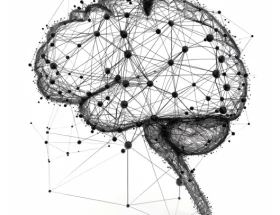
Research into high intelligence provides valuable insights into human cognitive abilities and their impact on individual and societal progress. By exploring the historical development of intelligence studies, the challenges of measuring exceptional cognitive abilities, and recent advancements in neuroscience and psychometrics, this article highlights the ongoing importance of understanding high-IQ individuals.
Background
The study of intelligence has its roots in ancient philosophy, with thinkers like Plato and Aristotle conceptualizing the nature of intellect. Modern empirical investigations began in the 20th century with the development of psychometric tools like the Stanford-Binet and later the Wechsler Adult Intelligence Scale (WAIS). These instruments laid the foundation for understanding cognitive abilities but also revealed limitations, particularly in assessing individuals with exceptionally high intelligence. Advancements in genetics and neuroimaging have since deepened the exploration of intelligence, focusing on both its biological basis and its interaction with environmental factors.
Key Insights
- Challenges in Measurement: Existing intelligence tests often struggle with the “ceiling effect,” limiting their ability to differentiate among highly gifted individuals. Specialized tools like the Advanced Progressive Matrices and newer tests such as the What’s Next? instrument aim to address these challenges.
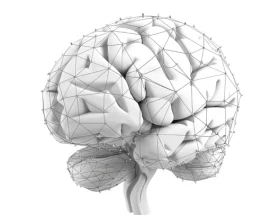
- Neural Correlates of High Intelligence: Neuroimaging studies, including functional MRI and diffusion tensor imaging, have linked exceptional intelligence to efficient brain connectivity, cortical thickness, and neural efficiency, particularly in regions like the prefrontal cortex.
- Genetic and Environmental Factors: Intelligence is influenced by a complex interplay of genetic predispositions and environmental conditions. Advances in genomics and epigenetics have shed light on how these factors interact to shape cognitive abilities over a lifetime.
Significance
High intelligence contributes to advancements in fields ranging from science to the arts, often driving innovation and problem-solving at both individual and societal levels. However, the study of high-IQ individuals also raises important questions about equity and inclusivity in educational and testing practices. Research underscores the need for psychometric tools that accurately reflect diverse cognitive strengths and adapt to the unique needs of exceptionally gifted individuals.
Future Directions
Future research may integrate findings from neuroimaging and genomics to refine intelligence assessments further. Continued development of psychometric tools tailored for high-IQ populations could improve educational strategies and professional pathways for these individuals. Additionally, interdisciplinary collaboration across neuroscience, psychology, and education is likely to advance the understanding of intelligence and its applications.
Conclusion
Studying high intelligence offers profound insights into the potential of human cognition and its role in shaping society. Addressing the limitations of existing tools and embracing technological advancements will ensure a deeper, more inclusive understanding of intelligence, benefiting individuals and communities alike.
Reference
Jouve, X. (2023). Advancements in Research on High-IQ Individuals Through Scientific Inquiry. Cogn-IQ Research Papers. https://pubscience.org/ps-1mT0O-0f27f5-UZgm
Modern Intelligence Testing: Principles and Practice
Intelligence testing has evolved significantly since Alfred Binet developed the first practical IQ test in 1905. Modern instruments like the Wechsler scales (WAIS-V for adults, WISC-V for children) and the Stanford-Binet Intelligence Scales (SB5) are built on decades of psychometric research, normative data collection, and factor-analytic refinement.
Contemporary IQ tests typically measure multiple cognitive domains organized according to the Cattell-Horn-Carroll (CHC) theory of cognitive abilities. Rather than producing a single number, they provide a profile of strengths and weaknesses across domains such as verbal comprehension, fluid reasoning, working memory, processing speed, and visual-spatial processing. This profile approach is more clinically useful than a single Full Scale IQ score, as it can identify specific learning disabilities, cognitive strengths, and patterns associated with various neurological conditions.
Test reliability — the consistency of measurement — is a critical quality indicator. Major IQ tests achieve internal consistency coefficients above 0.95 for composite scores and test-retest reliability above 0.90, making them among the most reliable instruments in all of psychology. However, reliability does not guarantee validity: ongoing research examines whether these tests adequately capture the full range of cognitive abilities valued across different cultures and contexts.
Frequently Asked Questions
What is cognitive ability?
Cognitive ability refers to the brain’s capacity to process information, learn from experience, reason abstractly, solve problems, and adapt to new situations. It encompasses multiple domains including verbal comprehension, perceptual reasoning, working memory, and processing speed.
How is intelligence measured?
Intelligence is primarily measured through standardized psychometric tests such as the Wechsler Adult Intelligence Scale (WAIS), Stanford-Binet, and Raven’s Progressive Matrices. These tests assess various cognitive domains and produce an Intelligence Quotient (IQ) score with a mean of 100 and standard deviation of 15.
People Also Ask
What are the link between physical activity and cognitive health?
Recent research highlights how everyday physical activity can benefit cognitive health. A study by Hakun et al. (2024) examined the short-term effects of regular physical activity on mental processing speed and working memory. Using real-time assessments, the study provides new insights into how light and moderate physical activities can promote brain health in middle-aged adults.
Read more →What are sensorimotor variability and early cognition?
A recent study by Denisova and Wolpert (2024) investigates how early sensorimotor features relate to cognitive differences in toddlers diagnosed with autism spectrum disorder (ASD). By examining over 1,000 children with varying IQ levels, the researchers reveal how sensorimotor variability impacts behaviors linked to autism, providing valuable insights for individualized interventions.
Read more →What are distinct genetic and environmental origins of hierarchical cognitive abilities in adult humans?
Understanding how genetic and environmental influences shape cognitive abilities remains a cornerstone of psychological research. Jiang et al. (2024) present an important study that examines these influences through a structured twin-based model. This research provides insight into how basic and higher-order cognitive functions are differentially affected by genetic inheritance and shared experiences.
Read more →What are shaping hierarchical cognitive abilities?
Recent research by Jiang et al. (2024) sheds light on the distinct genetic and environmental influences shaping hierarchical cognitive abilities in adults. By categorizing cognitive functions into two levels—basic processes and higher-order functions—this study provides valuable insights into how these abilities develop and differ in their origins.
Read more →Why is background important?
The study of intelligence has its roots in ancient philosophy, with thinkers like Plato and Aristotle conceptualizing the nature of intellect. Modern empirical investigations began in the 20th century with the development of psychometric tools like the Stanford-Binet and later the Wechsler Adult Intelligence Scale (WAIS). These instruments laid the foundation for understanding cognitive abilities but also revealed limitations, particularly in assessing individuals with exceptionally high intelligence. Advancements in genetics and neuroimaging have since deepened the exploration of intelligence, focusing on both its biological basis and its interaction with environmental factors.
How does key insights work in practice?
Challenges in Measurement: Existing intelligence tests often struggle with the "ceiling effect," limiting their ability to differentiate among highly gifted individuals. Specialized tools like the Advanced Progressive Matrices and newer tests such as the What's Next? instrument aim to address these challenges. Neural Correlates of High Intelligence: Neuroimaging studies, including functional